The Synthetic Doorway to Holistic Healing: Reconciling Ketamine-Assisted Psychotherapy’s Roots and Reach
It’s a question I’ve heard many times—often from thoughtful, intuitive people drawn to healing paths that feel natural, sacred, or rooted in tradition:
"How can something synthetic like ketamine support a truly holistic healing process?"
This question reveals an important and beautiful concern. When people come to therapy, especially therapy that reaches into the depths of trauma, identity, soul, and the search for meaning, they want to feel safe. And for many, “natural” feels like safety. Nature-based medicines like psilocybin, ayahuasca, peyote, or San Pedro have been part of healing lineages for thousands of years. They come from the earth. Ketamine, by contrast, was synthesized in a lab. So how can it be trusted to do sacred work?
And yet, in my years of facilitating Ketamine-Assisted Psychotherapy (KAP), I’ve witnessed again and again how a synthetic molecule can open a deeply organic, soulful, and integrative process—one that is every bit as powerful, embodied, and spiritual as plant medicine.
Let’s explore how and why this paradox holds up.
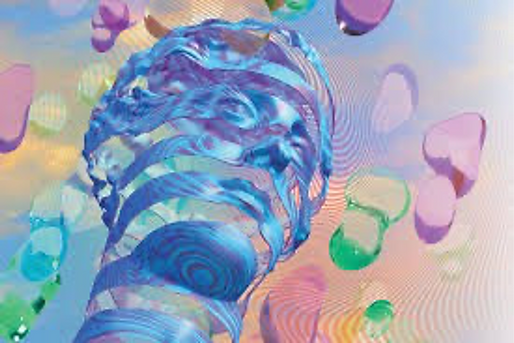
Psychedelics open the mind
The Role of the Medicine: Opening the Door, Not Doing the Work
Most psychiatric medications work by changing your neurochemistry in a way that only lasts as long as you’re taking them. The effect is direct and biochemical. The medication is the agent of change.
KAP is different. In KAP, ketamine does not do the healing—it opens a door. What happens once that door is open is what makes the process truly transformative.
In a carefully supported therapeutic setting, ketamine creates a temporary shift in consciousness. This shift can allow you to:
• Loosen the grip of entrenched thought patterns
• Step outside the rigid narratives that trauma and conditioning create
• Access a more spacious, connected, emotionally receptive version of yourself
• Encounter buried or dissociated memories in a way that is safe and symbolic
• Reconnect with deeper values, internal resources, and parts of yourself long exiled
The result? A space where healing arises not from the medicine, but through it. The medicine is the vehicle; you, the client, remain the healer.
Why This Is Holistic Work
We sometimes associate the word “holistic” with natural products or non-Western practices—but in its true meaning, holistic simply means whole. A holistic approach is one that addresses the entire person: body, mind, emotions, and spirit. It includes:
• Psychological insight
• Somatic (body-based) awareness
• Symbolic or imaginal content
• Relational and social dynamics
• Spiritual or transpersonal experience When done well, KAP engages all of these levels.
In fact, many KAP sessions unfold like a modern shamanic journey: the client enters an altered state, supported by music, ceremony, and the therapist’s grounding presence. In this space, they might meet archetypal figures, relive formative experiences, confront fear or grief, experience ego death, or reclaim a lost part of themselves.
Despite ketamine’s pharmaceutical origins, what unfolds in the room is something deeply ancient and profoundly human.

A Synthetic Molecule, a Natural Process
So how do we make sense of the fact that ketamine is a synthetic substance, and yet it gives rise to such intuitive, archetypal, soul-rich experiences?
Let’s take a broader view.
Consider music. A song played on a digital keyboard may be completely synthesized— and yet the emotion it evokes can be as real and powerful as one played on a centuries- old wooden flute.
Or take language. The words you're reading now are delivered through an artificial medium—a screen, encoded in digital bits—and yet what they carry is meaning, feeling, connection. It’s not the medium that makes something meaningful—it’s the context, the intention, and the relationship.
Ketamine’s synthetic origin doesn’t preclude it from being a catalyst for natural, embodied healing. In fact, because it’s short-acting, versatile in its effects, and well- researched, it allows us to create highly personalized and flexible sessions.
For many, this makes the experience more accessible than traditional plant medicines— while still drawing on the same inner healing intelligence those plants awaken.
Synthetic” Doesn’t Mean Shallow—Ask MDMA and LSD
If ketamine is controversial because it’s synthetic, so too are some of the most promising psychedelic medicines in development today.
• MDMA (3,4-methylenedioxymethamphetamine) is completely lab-synthesized, and yet it has shown remarkable results in treating PTSD—especially in veterans and trauma survivors. The Multidisciplinary Association for Psychedelic Studies (MAPS) has led groundbreaking Phase III trials showing that MDMA-assisted therapy can result in lasting resolution of trauma symptoms, even for people who have tried everything else.
• LSD (lysergic acid diethylamide), first synthesized by Albert Hofmann in 1938, is another lab-born molecule with potent effects on meaning-making, interconnectedness, and emotional breakthrough. Decades of research have shown that LSD, even in low doses, can catalyze spiritual experience, enhance creativity, and reduce anxiety and depression.
In other words, lab synthesis doesn’t disqualify a medicine from being deeply healing. What matters is the context, the relationship, and the process. Psychedelic therapy is not about the molecule alone—it’s about the intention, the container, the integration, and your readiness to meet yourself.
Short Journeys, Deep Transformations

While plant medicines like ayahuasca often require long ceremonies and leave a significant recovery period afterward, ketamine journeys tend to be shorter and easier to integrate.
The typical KAP session involves a 2–3 hour in-person journey, followed by a separate integration session the next day. The medicine leaves the body relatively quickly, and many people report minimal aftereffects. But the insights and shifts that occur during the experience can be profound.
Depending on the dosage and intention, the journey may take on any of the following forms:
• Psycholytic (low dose): Enhances emotional awareness and relational processing while staying grounded
• Empathogenic: Evokes warmth, self-compassion, and the ability to revisit trauma with less defensiveness
• Psychedelic / Out-of-Body: Creates distance from ego and ordinary identity, allowing contact with symbolic or transpersonal material
• Ego Dissolution: A rarer, deeper surrender into a state of unity, timelessness, or nonduality
Each of these can support different aspects of healing—and all can be held within a structure that honors your needs, your safety, and your personal goals.
A Natural Path Toward Connection
In a recent exchange, someone described feeling isolated even when life was otherwise going well. This is a familiar pattern for many: on the surface, things look fine. But inside, there’s disconnection. A sense of something missing. A feeling of being fundamentally alone or unseen.
KAP, in its symbolic depth and capacity to bypass ordinary defenses, often gets right to the heart of that pattern. In the space opened by ketamine, people often rediscover:
• A felt connection to their own inner child or forgotten self
• A sense of belonging to something larger than their pain
• The realization that they are not broken, but deeply impacted—and capable of healing
It is here that the true medicine lies—not in the ketamine molecule itself, but in what it unlocks.

Closing Thoughts: Sacred Work in Modern Clothing
I’m deeply excited about the eventual legalization of psilocybin and other plant medicines for therapeutic use. They offer tremendous gifts.
But until then—and even beyond—ketamine offers a powerful, safe, and flexible tool for healing. And when practiced with care, reverence, and relational depth, Ketamine- Assisted Psychotherapy is not a departure from holistic healing—it’s a profound expression of it.
If you’ve been unsure about whether synthetic medicine can still support soul-level work, I hope this has given you something to reflect on.
The healing is real. The process is whole.
And the journey is yours.