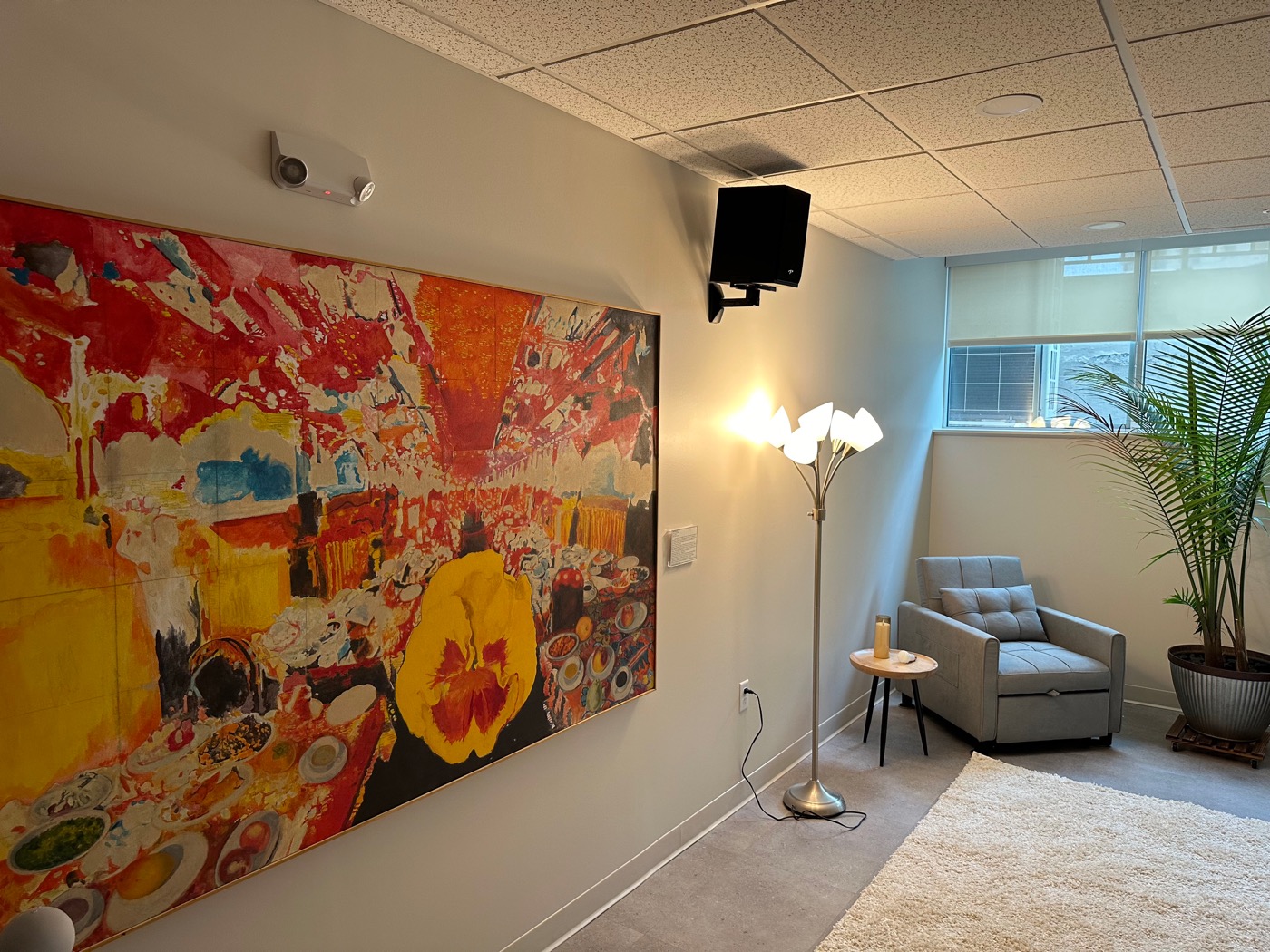
Ketamine-Assisted Psychotherapy (KAP) combines the benefits of ketamine medicine with guided therapy to help you safely explore, process, and heal emotional pain. In a calm, intentional setting, clients often experience renewed perspective, release from long-held patterns, and a deeper sense of connection to self and meaning.
Schedule a ConsultationKetamine-Assisted Psychotherapy (KAP) combines the therapeutic use of ketamine with talk therapy to support emotional healing, insight, and transformation. Ketamine is a legal, fast-acting medicine that can create a non-ordinary state of consciousness, helping loosen rigid thought patterns, reduce avoidance, and open access to deeper emotional material. When paired with a skilled therapist in a safe, structured setting, this state can support breakthroughs in healing that might be difficult to reach through talk therapy alone.
KAP typically involves a preparation phase, a ketamine dosing session, and integration sessions to process the experience and apply insights in daily life. Sessions are collaborative, trauma-informed, and grounded in your intentions. Whether working with depression, trauma, anxiety, or existential concerns, KAP offers a unique opportunity to explore the inner landscape with both medical and psychological support.
We offer ketamine-assisted psychotherapy (KAP) in Buffalo, NY, providing a safe and supportive environment for individuals seeking relief from depression, anxiety, trauma, and other mental health challenges.
Located in the Buffalo area, our practice serves clients throughout Western New York, including Amherst, Williamsville, and surrounding communities.
Our approach combines evidence-based psychotherapy with carefully guided ketamine sessions, helping clients access deeper emotional insight and lasting change.
Explore how Ketamine-Assisted Psychotherapy (KAP) works, what sessions are like, and how it may support emotional healing and personal growth. Whether you're just curious or beginning to explore options, these resources can help you understand the process.
I aim to make the process of Ketamine-Assisted Psychotherapy (KAP) transparent and accessible. Below is a clear summary of how KAP is structured — including pricing, insurance coverage, and practical details.
Many parts of the KAP process can be covered by insurance.
Covered by insurance:
✅ Initial consultation (1 hour)
✅ Preparation (Prep) sessions (1 hour)
✅ Integration sessions (1 hour)
✅ One hour of each 3-hour Dosing session
Private pay required:
❌ Remaining 2 hours of each Dosing session
I am in network with:
Additionally, my prescribing partner, Journey Clinical, accepts these insurance plans in NY State for their medical services and ketamine prescribing:
Initial KAP Package
(Includes first two oral dosing sessions)
ServiceCost
Initial consultation (1 hour) $250/hour — may be covered by insurance
Preparation sessions (1+ hours) $250/hour — may be covered by insurance
Two Oral Dosing Sessions (3 hours each) $500 per session ($1,000 total) — private pay for 2 hours per session; 1 hour billed to insurance
Integration sessions (1+ hours)$250/hour — may be covered by insurance
Additional Dosing Sessions
ServiceCost
Additional Oral Dosing Session (3 hours)$500 per session — private pay for 2 hours; 1 hour billed to insurance
Service First-time patients Ongoing treatment
Initial medical evaluation + medication (covers 2 sessions) $347 total
Follow-up medical consultation + medication (covers up to 6 sessions) $313 total (per quarter)
Note: Journey Clinical’s medical consultations may be covered if you are in-network with Aetna, Cigna (Evernorth), or United Healthcare.
Monday 8:00 am – 4:00 pm - Telehealth video
Tuesday 8:00 am – 4:00 pm - Telehealth video
Wednesday 8:00 am – 4:00 pm - IN PERSON DOSING ONLY
Thursday 1:00 pm – 4:00 pm - KAP integration only
Wednesdays 9:00 am – 12:00 pm
Wednesdays 1:00 pm – 4:00 pm
Thursday 9:00 am – 12:00 pm - Telehealth video
If you’re new to KAP, we will begin with an initial consultation to explore your needs and whether this work is a good fit for you. After that:
If you’re searching for ketamine therapy in Buffalo, it helps to know that not all ketamine care looks the same. Some clinics offer ketamine largely on its own — often as an IV infusion, with the focus on the medicine and the dose. That model can bring relief, but it leaves the deeper work of meaning and change largely up to you.
At Samadhi Healing Collective, we practice ketamine-assisted psychotherapy (KAP). The medicine is one part of a relationship: we prepare together beforehand, your therapist stays present through the experience, and we integrate it afterward. Ketamine can soften rigid patterns and open access to feelings and memories that are hard to reach through talk alone — and the therapy is what helps that opening translate into lasting change.
For people working with trauma in particular, that relationship matters. A brief window of openness is most useful when someone you trust is beside you, helping you move toward what’s tender rather than around it. That’s the work we do — ketamine therapy grounded in attachment, EMDR-informed care, and somatic awareness, in Buffalo and across Western New York.
Both use the same medicine; what differs is the structure around it. “Ketamine therapy” often refers to ketamine given largely on its own, sometimes as an IV infusion, with the focus on the medical side. Ketamine-assisted psychotherapy (KAP) places the medicine inside a therapy relationship: preparation beforehand, a therapist present during the dosing session, and integration afterward to make sense of what comes up. At Samadhi Healing Collective, we practice KAP — the medicine opens a window, and the therapeutic work is what helps that opening lead somewhere lasting.
A dosing session runs about three hours in a calm, private office in Buffalo. You take a sublingual tablet, settle in, and your therapist stays present throughout. Many people enter a non-ordinary state — a loosening of the usual mental patterns, sometimes vivid imagery, sometimes a deep stillness. There’s no single right way to have the experience. Afterward, integration sessions help you carry any insight or relief into everyday life.
Partly. Several parts of the process — your initial consultation, preparation sessions, integration sessions, and a portion of each dosing session — can often be billed to insurance as psychotherapy. The remaining dosing time is private pay. Medical screening and ketamine prescribing are handled through our partner, Journey Clinical. We’ll walk you through the structure and cost before you begin, and payment plans or sliding scale may be available in some cases.
Ketamine has a long medical track record, and in this setting it’s used at low doses with screening and prescriber oversight through Journey Clinical. Every prospective client completes a medical and psychological screening to determine whether KAP is appropriate, and sessions are monitored. It isn’t the right fit for everyone — which is exactly what the screening and initial consultation are for.
People most often come to KAP for depression, anxiety, PTSD and the effects of complex trauma, or a sense of being stuck in patterns that talk therapy alone hasn’t shifted. Because our practice centers trauma and attachment, KAP here is integrated with approaches like EMDR and somatic work rather than offered as a standalone treatment. Whether it’s a good fit for what you’re carrying is something we determine together in an initial consultation.
The first step is an initial consultation, where we talk through what’s bringing you in, answer your questions, and decide together whether KAP is a good fit. From there, medical screening is completed through Journey Clinical, followed by preparation, dosing, and integration sessions. You can reach out through our website or by phone to begin.
Compassionate care, innovative therapies, and a supportive community designed to help you heal and thrive.
Book a Consultation