Hanuman- archetype of devotion, love, and unconditional acceptance in ketamine-assisted therapy
Hanuman is one of the most beloved figures in Hinduism—a deity who embodies courage, humility, selfless service, and unwavering devotion. He is a central character in the Ramayana, the ancient Sanskrit epic that tells the story of Prince Rama's quest to rescue his wife Sita from the demon king Ravana.
As the devoted servant of Rama, Hanuman is revered as the ultimate bhakta (devotee). He is an incarnation of Shiva, yet fully dedicates his life to Rama, an incarnation of Vishnu. In Hindu cosmology, this dual connection between Shiva and Vishnu reflects unity in diversity—the dissolver serving the preserver out of pure love, a paradox that deepens Hanuman's significance.
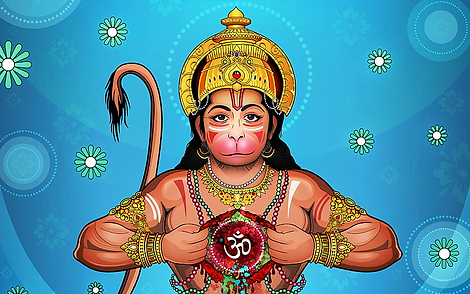
Visually, Hanuman is often depicted as a strong, agile monkey-faced being, carrying a mace (gada) and sometimes a mountain in his hand. The mountain image refers to his legendary act of leaping across the ocean to find Sita and later carrying the Sanjeevani herb to revive Lakshmana, Rama's brother. This story encapsulates his supernatural strength, quick wit, and complete surrender to the service of love.

Symbol of Love, Devotion, and Acceptance
Hanuman's enduring power as a spiritual archetype comes from his role as a symbol of unconditional love. In the Ramayana, his devotion to Rama is total—he asks for nothing in return, and his every action is oriented toward serving Rama's mission. This love is not transactional but flows freely, grounded in complete trust.
Hanuman also represents acceptance without judgment. In stories, he welcomes others regardless of their flaws or background. His service to Rama is not contingent on perfect conditions—it is a full embrace of reality as it is, combined with fearless action to protect what is good and just.
In devotional practice, chanting the Hanuman Chalisa (a 40-verse hymn in praise of Hanuman by the poet-saint Tulsidas) is believed to bring courage, remove fear, and open the heart. Hanuman's love is expansive and inclusive, making him an ideal focus for those seeking acceptance of self and others.
Psychologically, Hanuman is often seen as the awakened inner capacity for selfless service that transcends ego. His humility—despite his great power—offers a template for integrating strength with compassion.
Hanuman’s Role in Bhakti and the Guru Tradition
In the broader context of Hindu practice, Hanuman stands at the heart of bhakti yoga—the path of devotion. While deities like Krishna inspire love through divine play and sweetness (madhurya), Hanuman inspires love through loyalty, service, and courage (dasya bhava, the mood of being a servant to the Divine).
This devotional archetype has been carried forward not only in India but also into contemporary spiritual movements worldwide, especially through figures like Neem Karoli Baba (Maharaj-ji).
Hanuman and Neem Karoli Baba

Neem Karoli Baba, the 20th-century North Indian saint, had an intimate and lifelong relationship with Hanuman. His ashrams are adorned with Hanuman temples, and he often directed devotees to chant the Hanuman Chalisa as a primary spiritual practice.
Maharaj-ji embodied Hanuman’s qualities: boundless compassion, unconditional acceptance, and tireless service. Just as Hanuman’s love for Rama knew no bounds, Neem Karoli Baba’s love for his devotees was complete, embracing them as they were—flawed, searching, wounded, or even skeptical.
Stories from devotees recount Maharaj-ji reminding them that Hanuman was not only a mythological being but a living presence available to those who call upon him. For many, devotion to Maharaj-ji and devotion to Hanuman were inseparable—one was the gateway to the other.
Ram Dass and Hanuman’s Western Presence
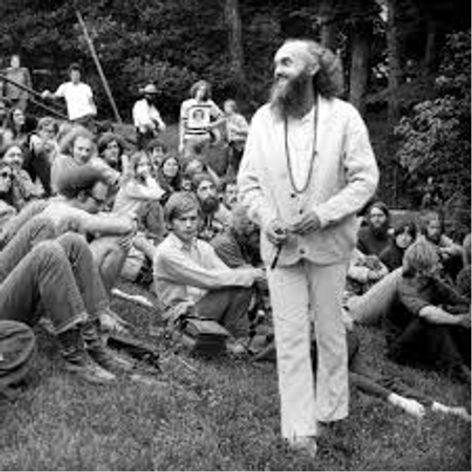
The spread of Hanuman devotion to the West owes much to Ram Dass (formerly Richard Alpert), who met Neem Karoli Baba in 1967. This meeting transformed him from a Harvard psychologist experimenting with psychedelics into a spiritual teacher rooted in love and service.
Ram Dass learned from Maharaj-ji that the highest state of consciousness is pure love, and that Hanuman is the embodiment of that love. Through books like Be Here
Now and public talks, Ram Dass introduced Hanuman’s story and symbolism to Western audiences—not as a distant myth, but as an archetype for living with an open heart.
For Ram Dass, Hanuman was a model for the devotional path:
• Serve God in everyone.
• Act without expectation of reward.
• Love without conditions.
Many Western followers of Neem Karoli Baba integrated Hanuman chants, imagery, and values into their spiritual practice, finding in him a relatable symbol of service and devotion that transcended cultural boundaries.
Ancient Wisdom Meets Modern Medicine- ketamine-assisted therapy
Today, the healing principles embodied by Hanuman—unconditional love, acceptance, and the capacity to hold space for others' pain—find remarkable resonance in contemporary therapeutic approaches, particularly ketamine-assisted psychotherapy (KAP).
Like the Sanjeevani herb that Hanuman carried to heal Lakshmana, ketamine acts as a powerful medicine that can revive hope in those suffering from treatment-resistant depression, PTSD, and other mental health conditions. The parallels between Hanuman's devotional qualities and the therapeutic stance required in KAP are striking.
Unconditional Positive Regard: Just as Hanuman accepts all beings without judgment, effective ketamine therapy requires therapists to hold space with complete acceptance for whatever arises in a patient's consciousness—whether beautiful visions or difficult memories. The ketamine experience can dissolve the ego's defenses, much like devotional practice dissolves the sense of separation between devotee and divine.
Service Beyond the Self: Hanuman's selfless service mirrors the therapeutic relationship in KAP, where practitioners dedicate themselves fully to their patients' healing journey. The medicine creates an expanded state of consciousness that, like devotional ecstasy, can reveal the interconnectedness of all beings and foster profound compassion.
Strength in Surrender: Hanuman's great power is balanced by complete surrender to Rama's will. Similarly, ketamine therapy involves a paradoxical dance between the medicine's powerful effects and the patient's need to surrender control, trusting in the healing process guided by skilled practitioners.
Integration and Service: After Hanuman's heroic journeys, he returns to integrate his experiences in service to others. In KAP, the integration sessions following ketamine treatment are crucial—helping patients weave their expanded consciousness insights into daily life through acts of love, service, and connection.
Many practitioners and patients in ketamine therapy report experiences of universal love, ego dissolution, and renewed sense of purpose that echo the devotional states described in Hindu texts. The medicine can catalyze what Hanuman represents: a heart so open that suffering beings are embraced without condition, and strength so grounded in love that service becomes effortless.
Conclusion: Hanuman as a Universal Archetype
Hanuman's place in Hindu tradition is profound: he bridges the divine and the human, strength and humility, power and surrender. In the modern era, through the work of Neem Karoli Baba and Ram Dass, he has also become a bridge between East and West—a living symbol of deep love, acceptance, and service that speaks to seekers in every culture.
Today, as consciousness-expanding medicines like ketamine find their place in mainstream healthcare, we discover that the qualities Hanuman embodies—radical acceptance, selfless service, and unwavering devotion—remain as relevant as ever. Whether in ancient temples or modern therapy rooms, the same principle applies: healing happens when we create space for love to flow freely.
Whether reciting the Hanuman Chalisa, sitting in meditation, participating in ketamine therapy, or simply embodying his qualities in daily life, devotees and seekers find in Hanuman a timeless reminder:
True strength lies in love. True freedom lies in service. And the heart's deepest fulfillment comes from embracing all beings without condition.
In this light, both ancient devotional practices and modern therapeutic approaches become different expressions of the same fundamental truth—that consciousness, when approached with reverence and guided by love, holds infinite potential for transformation and healing.